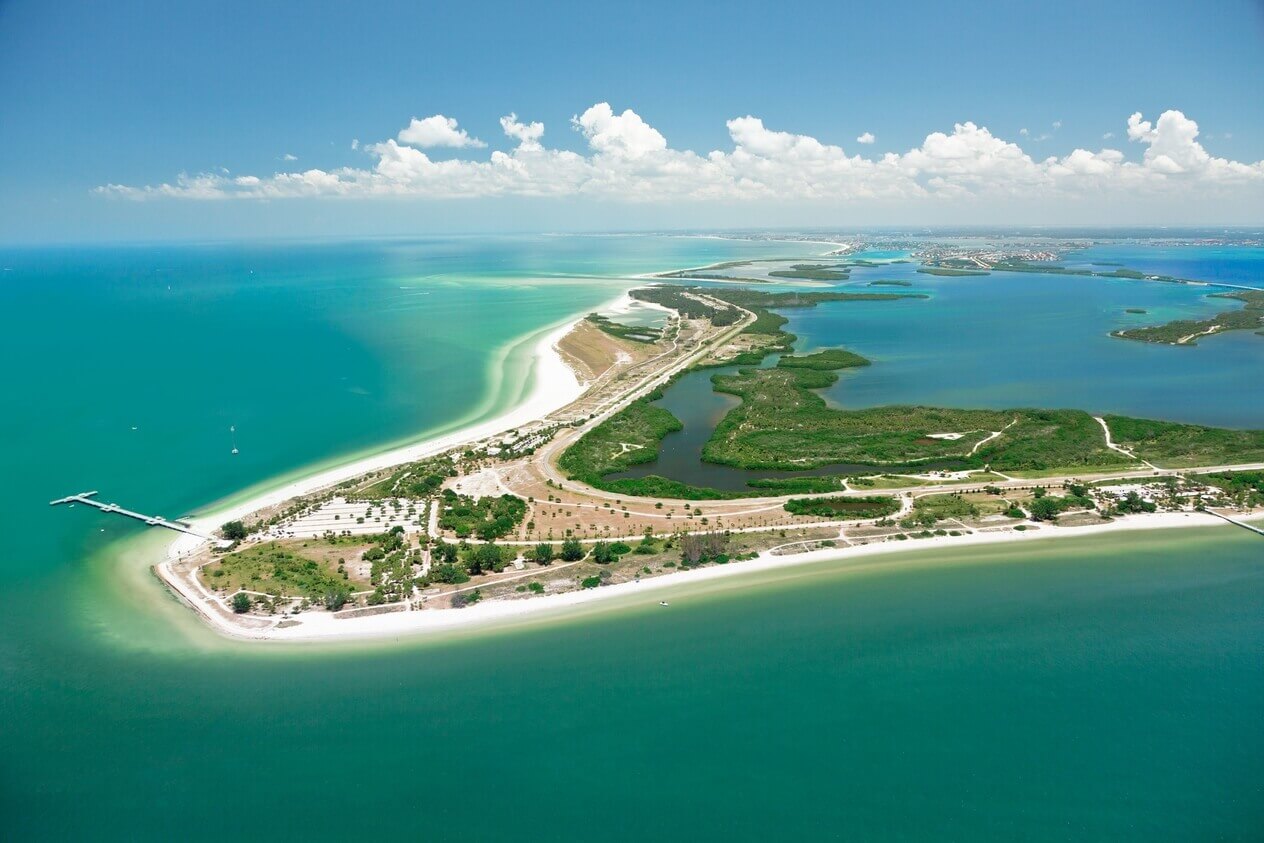
Most people flying into Tampa International turn north toward Clearwater or book a hotel in St. Pete and never drive the extra 30 minutes south to see what Pinellas County's lower coastline actually looks like. That's partly a marketing gap and partly the result of toll roads that thin traffic naturally. Fort De Soto Park and St. Pete Beach sit close together on the Gulf side of the county, and together they cover a wider range of beach experiences than either Clearwater or the more famous stretches of Anna Maria Island to the south.
The Pinellas County coastline in this stretch has something that's increasingly hard to find on Florida's Gulf Coast: a county park where you can still walk a long uninterrupted strip of sand without the commercial development that has filled in nearly everything else. Fort De Soto preserved that character because it's managed as a park, not a resort corridor. St. Pete Beach, by contrast, has the hotels and restaurants and beach bars, but it sits on its own barrier island and the sand quality is as good as anywhere in the state. You can do both in the same day or split them across two days depending on how much time you have.
From Tampa International, Fort De Soto is about 30 minutes via I-275 South and the Pinellas Bayway toll road. St. Pete Beach sits closer to the airport and is easier to reach without tolls. The drive on the Bayway to Fort De Soto passes over open water, crosses several small causeways, and gives you your first sense of how different the geography down here is from the mainland.
Fort De Soto Park
Fort De Soto is a Pinellas County park covering about 1,100 acres across five connected keys at the mouth of Tampa Bay. There's no resort development on the beach itself, no hotels, no rental stands crowding the waterline. The park has a small cafe near the fishing pier, picnic pavilions, restrooms, a campground, and a boat ramp. That's about it for infrastructure. What it has in abundance is shore.
The park's two main beach areas face entirely different directions and behave differently as a result. The north beach is the one that gets photographed. The sand is white quartz that squeaks when you walk on it, which is a quality specific to that kind of very fine, very pure quartz grain. The water in front of the north beach stays shallow for a long way out, making it calm and good for children. At low tide, a small island becomes visible maybe 200 yards offshore and you can wade across to it. People do that regularly. It takes about 20 minutes to walk the perimeter of the island and come back. At higher tide it's too deep to do safely, so check the tide chart before planning your visit around it.
The east beach faces open bay water toward the Sunshine Skyway Bridge, the cable-stayed bridge that connects St. Petersburg to Terra Ceia on the south shore of Tampa Bay. The view is entirely different from the north beach -- commercial vessels move under the bridge, sailboats cross the bay, and the scale of the bay becomes apparent in a way it doesn't when you're just looking at the Gulf. The east beach is quieter because most visitors come for the swimming, and the east side isn't ideal for that. It's better for sitting and fishing and watching the water.
The wildlife at Fort De Soto is the other reason to come. Great blue herons work the shallows with the patience they're known for. Bald eagles nest in the Australian pine trees toward the interior of the park -- you'll see them if you spend enough time near the tree line. Mullet jump in the shallows around the flats, which is always a little startling the first time you see it. During spring migration the bird density picks up considerably; the park sits on a barrier island chain that acts as a natural rest stop for birds crossing the Gulf. Fort De Soto is part of the Great Florida Birding Trail for that reason.
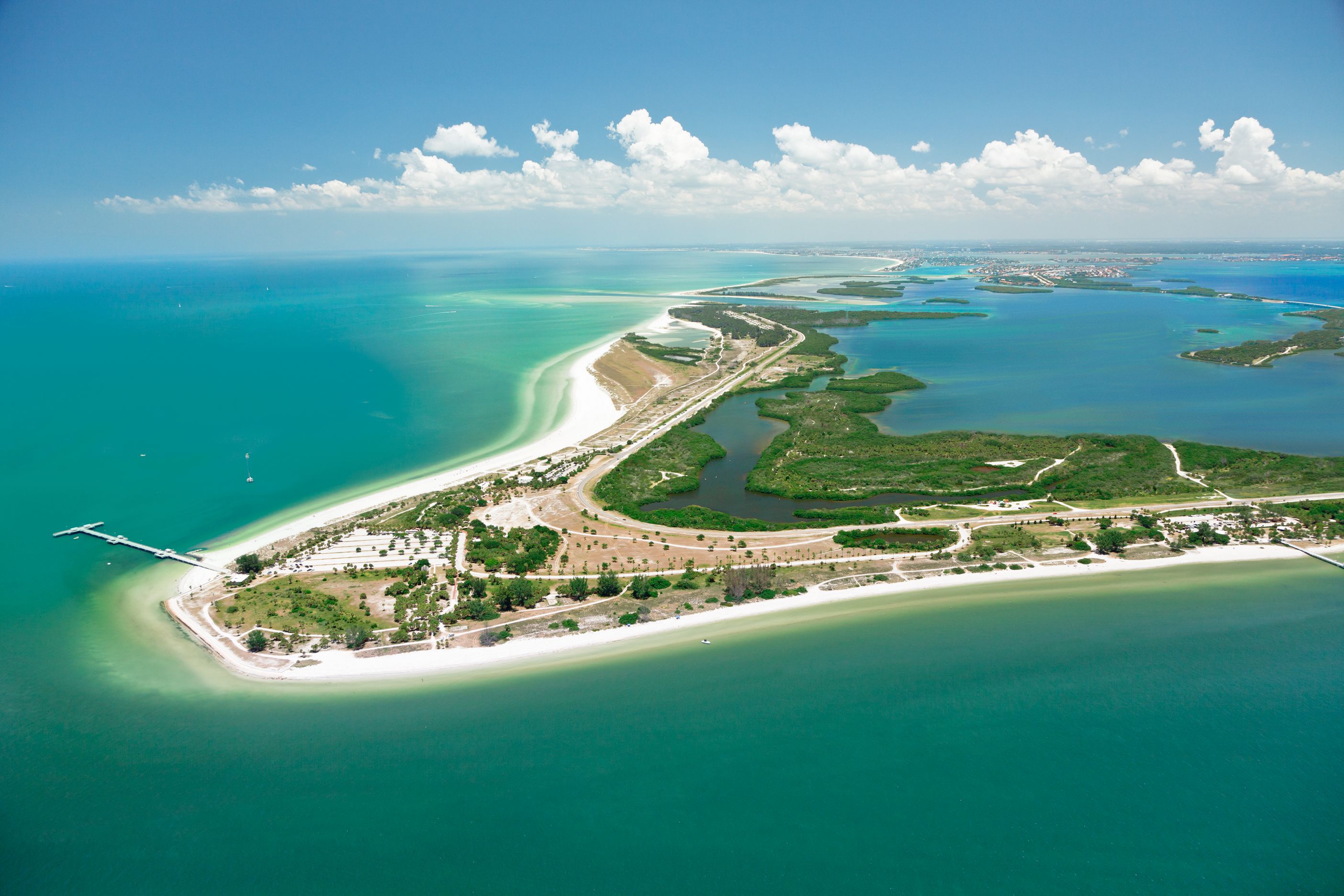
There is almost no natural shade on the beach itself. The Australian pines that line parts of the park's interior don't extend to the shore. Bring a beach umbrella if you're spending more than an hour in the sun, particularly between 10am and 3pm in any season. A full-brim hat and a UPF shirt are useful additions.
Camping at the park costs around $30 per night and is genuinely popular -- the sites near the water book up weeks in advance for weekends in winter and spring. The campground has full hookups, a bathhouse, and enough trees to feel more like camping than a parking lot. Waking up at a Fort De Soto campsite and walking to the north beach before anyone else arrives is one of the better early-morning experiences available in the Tampa Bay area.
St. Pete Beach
St. Pete Beach is a different kind of place. It's a Gulf island town with a full strip of hotels, restaurants, and bars running parallel to the beach. The commercial development is part of the appeal for many people -- you park, walk 100 yards, and the sand is right there, with a beer or a plate of fish tacos available within five minutes of leaving the water. That's a different value proposition from Fort De Soto, and it's a legitimate one.
The sand quality at St. Pete Beach is one of its consistent strengths. The same fine quartz that makes Fort De Soto's north beach distinctive shows up here. Gulf sand tends not to hold heat the way Atlantic-side sand does -- you can walk across it in the afternoon without the soles of your feet registering a protest, which is something you notice if you've spent time at Florida beaches on the Atlantic side.
For lunch, Woody's Waterfront on the water side of the strip has been a reliable stop. It's a casual place -- sandwiches, burgers, cold drinks -- with outdoor seating that looks over the water. Not a destination restaurant, but exactly right for a beach lunch when you want to sit outside in the middle of the day and not spend a lot of money or time. The outdoor tables fill up on weekends, so arriving before noon or after 2pm is the easier choice.
Crabby Bill's is the dinner option. It's larger than Woody's, explicitly focused on seafood, and has both indoor dining and a patio facing the water. Fresh grouper, shrimp, and stone crab (in season, October through May) are the things to order. The prices are honest for a waterfront seafood restaurant and the portions are not small. Go at dinner on a weekday to avoid waits.
The more unusual dining option is Spinners at the Grand Plaza Hotel. Spinners is a revolving rooftop bistro on the twelfth floor that completes one full 360-degree rotation every 90 minutes. The views take in the Gulf, the bay side, and the resort strip below. It's a fine dining experience with prices that reflect the setting, and it works well for a special occasion or a sunset dinner when the view justifies the cost. The reservation situation on weekends is tight; book several days in advance.
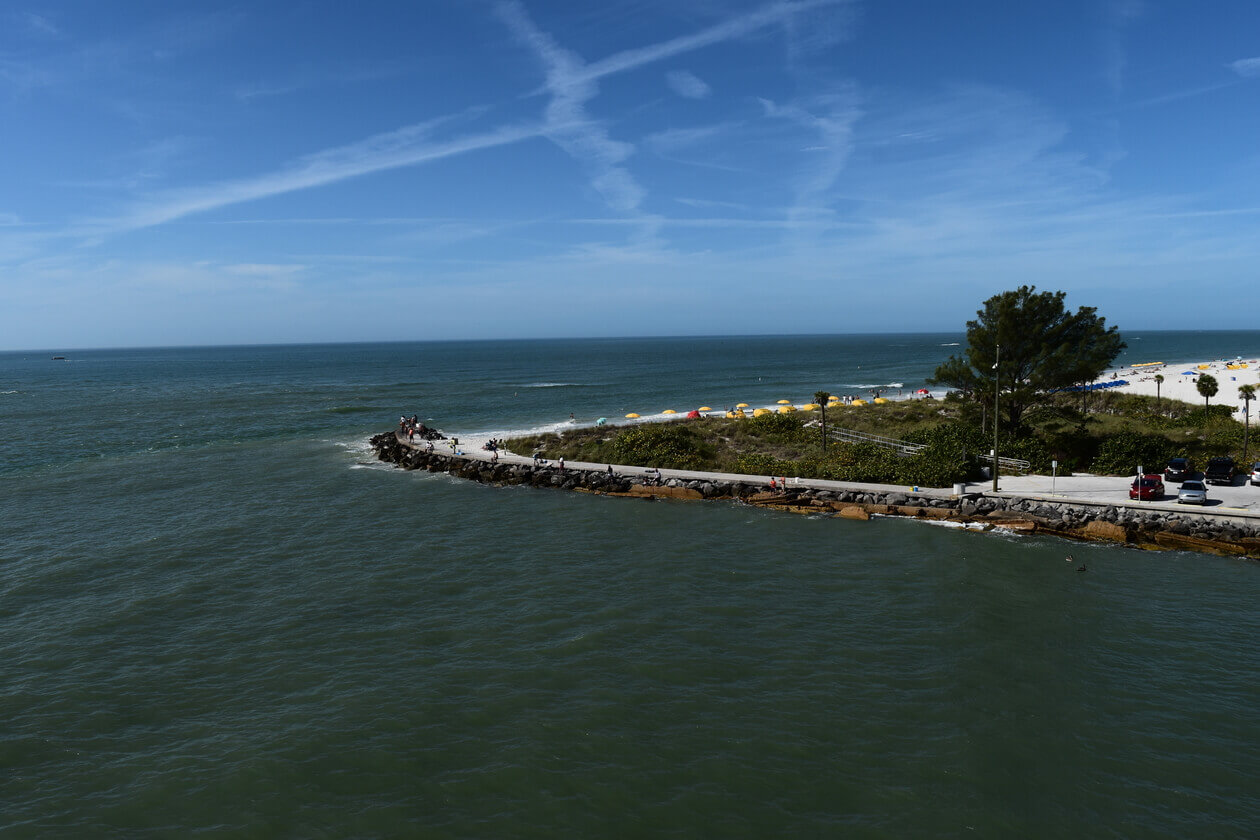
Parking is metered throughout the main beach strip at $2.75 per hour, payable by card or cash. The municipal beach access lot across from Dolphin Village Shopping Center has reliable availability earlier in the morning. Upham Beach Park to the south has its own lot. Free street parking exists on Corey Avenue, which is about a 10-minute walk to the beachfront and fills later than the waterfront lots. On busy winter weekends, the street parking on Corey is worth the walk if you arrive after 10am.
Getting There
From Tampa International Airport (TPA), take I-275 South across the Howard Frankland Bridge, then follow signs for the Pinellas Bayway (Route 679) to reach Fort De Soto. The Bayway portion runs through several short causeways over open water and ends at the park entrance. Total drive time is about 30 minutes in normal traffic.
For St. Pete Beach, the simpler route from TPA runs south on I-275 and exits onto Route 682 West (the Pinellas Bayway branch) or cuts further south before crossing to the barrier island. The drive is similar in time to Fort De Soto but avoids the additional toll booths. Neither location is accessible by public transit. Pinellas County has a bus system but its routes don't extend to the barrier islands at Fort De Soto or the southern portion of St. Pete Beach. A rental car from TPA is the practical requirement.
Best Time to Visit
October through May is the practical window for the Gulf Coast beaches in this area. The temperature range during those months runs from the low 60s on cooler winter days to the low 80s in April and May. Water temperatures from November through February drop into the upper 60s -- cool enough to notice but warm enough that many people swim anyway. By March and April the water is comfortable again.
Summer at Fort De Soto and St. Pete Beach means heat, humidity, and afternoon thunderstorms that build over the Gulf almost daily from June through September. The storms typically arrive between 2pm and 4pm, last 30 to 45 minutes, and then pass. If you're comfortable working around that rhythm it's manageable, but it constrains afternoon beach time. Gulf jellyfish sightings also increase in summer -- moon jellies and, occasionally, Portuguese man-o-war are more frequent during the warmer months.
March and April are the busiest months due to spring break, but the weather in that window is about as good as Florida gets. If you can visit on weekdays during March or April, the crowds at Fort De Soto specifically are noticeably lighter than on weekends. St. Pete Beach on a Tuesday in April is a different experience from St. Pete Beach on a Saturday in March.
November and early December are underrated. The summer crowds are gone, rates drop at most hotels, and the weather is reliably clear with temperatures in the mid-70s. The water is warm enough to swim in through early November, and the park wildlife activity picks up as migratory birds arrive.
Where to Stay
Camping at Fort De Soto ($30/night) is the right choice if you're at all comfortable with it. The campground has hookups, a bathhouse, and reasonable proximity to both the north and east beaches. Sites near the water fill first; book through the Pinellas County parks reservation system 4-6 weeks out for any weekend between November and April.
For hotels, the price geography around St. Pete Beach rewards some basic map reading. The oceanfront strip on Gulf Boulevard carries the highest rates, as expected. Corey Avenue runs parallel to and inland from the beach, about 10 minutes on foot, and has a cluster of smaller hotels and motels that run $40 to $70 less per night than comparable beachfront properties. That difference adds up over a three-night stay.
Mid-range beachfront options on St. Pete Beach are concentrated between 65th and 75th Avenues on Gulf Boulevard. The Loews Don CeSar Hotel is the landmark property at the north end of the beach -- a 1928 pink Mediterranean Revival building that is recognizable from a distance and worth seeing even if you're not staying there. It's priced accordingly. More practical mid-range choices sit in the blocks to its south.
Boutique alternatives exist along the stretch between St. Pete Beach and Treasure Island to the north. Smaller properties along this corridor are often quieter than the main strip and have better availability on short notice.
Search current availability below: