Savannah has a reasonable argument for being the most beautiful city in the American South. Twenty-two public squares filled with live oaks and Spanish moss, streets of antebellum townhouses, a working waterfront on the Savannah River, and an 18-mile drive east that puts you on one of Georgia's most laid-back beaches. It works as a weekend trip and rewards a full week just as well.
This guide covers three days: the historic district, the squares, Forsyth Park, Wormsloe, River Street, the best food, and the full Tybee Island day trip. It's built around what's actually worth your time.
Day 1: Historic Savannah
Morning: The Squares and the Historic District
Savannah was designed around a grid of 24 squares (22 survive), and walking through them is still the best orientation the city offers. Each square has its own character, its own oak canopy, and its own layer of history. Start at Johnson Square (the oldest) and work your way south through Chippewa, Wright, and Calhoun squares before finishing at Forsyth Park.
Forsyth Park is the crown of the district: a 30-acre park with a landmark fountain from 1858, massive live oaks, and enough space to watch Savannah's local life play out on a weekend morning. The park hosts a farmers market on Saturday mornings. Free, always.
The Mercer Williams House on Monterey Square is the house from the book (and film) "Midnight in the Garden of Good and Evil" and worth a slow walk past. Tours are available if you want to go inside.
The Cathedral of St. John the Baptist on Lafayette Square is one of the finest Gothic Revival churches in the South. Open to visitors daily; the interior is worth 15 minutes.
Afternoon: SCAD and River Street
SCAD (Savannah College of Art and Design) operates several public galleries throughout the city. The SCAD Museum of Art on Martin Luther King Jr. Boulevard has rotating exhibitions and a permanent collection that's routinely underrated. Free public galleries are scattered across the historic district.
River Street is Savannah's waterfront district, a stretch of converted 19th-century cotton warehouses now filled with shops, restaurants, and bars. The cobblestones are rough on ankles (worth the warning). Grab a drink from one of the open-air bars and watch the container ships navigate the river. Late afternoon is the best time to be here.
Leopold's Ice Cream on Broughton Street has been operating since 1919. If the line is manageable, go. The flavors are original recipes and the interior is a working mid-century soda fountain.
Evening: Dinner in the Historic District
The Olde Pink House (23 Abercorn Street) is the most atmospheric restaurant in the city: a Colonial-era mansion turned fine dining, with live piano music and a well-regarded coastal Georgia menu. Reservations recommended. Not the cheapest option but the setting is irreplaceable.
For a more casual dinner: Angel's BBQ on West Hull Street operates out of a Victorian-era building and serves some of the most-respected barbecue in town.
Day 2: Wormsloe, Museums & Southern Food
Morning: Wormsloe Historic Site
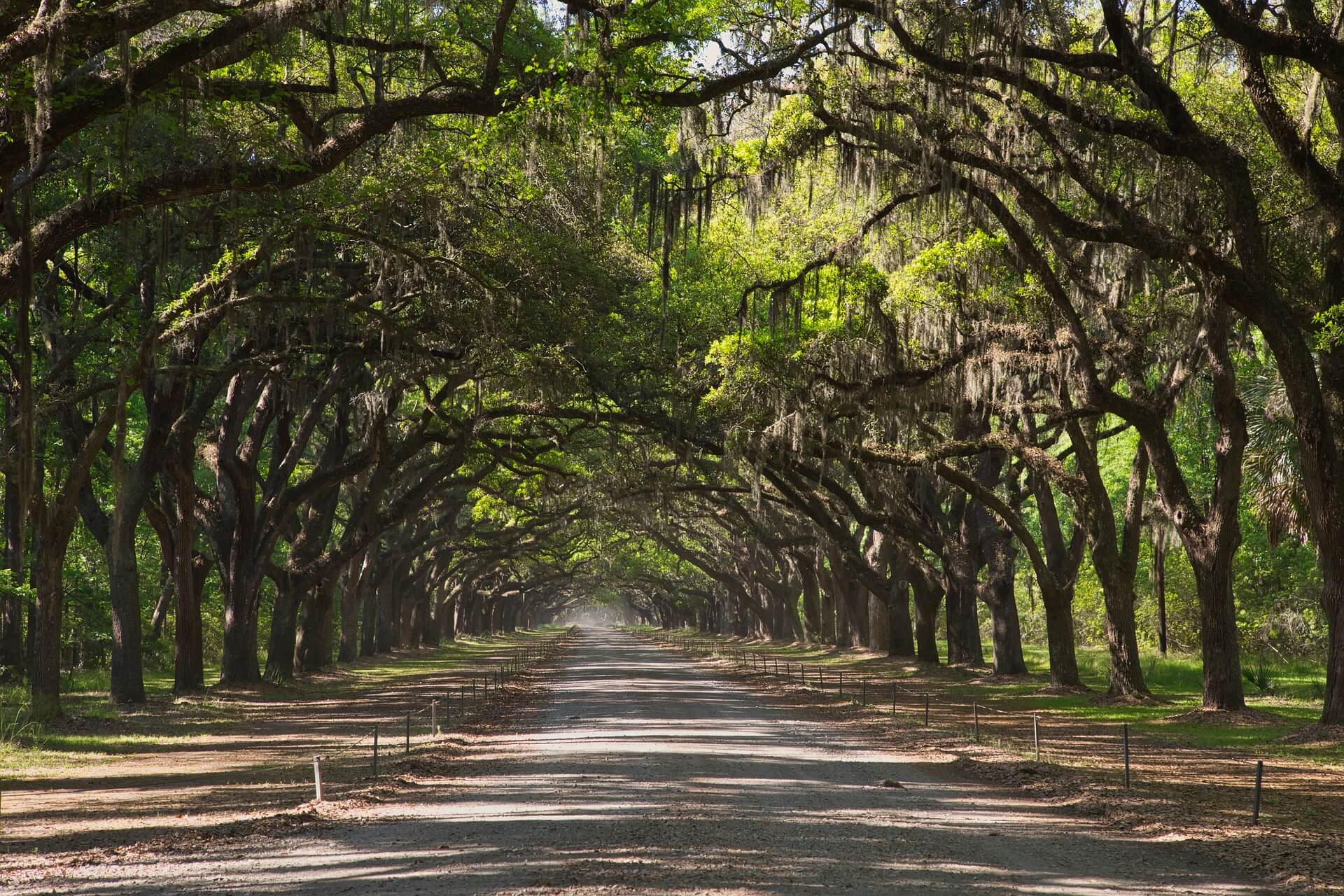
Wormsloe is 8 miles south of downtown and is non-negotiable if you have 3 days in Savannah. The entrance avenue is a mile-long canopy of 400-year-old live oaks draped in Spanish moss. It's one of the most photographed natural corridors in the US and looks nothing like any other place in the country.
Beyond the oak avenue: the ruins of a colonial tabby structure from the 1730s, hiking trails through salt marsh and maritime forest, and an educational exhibit on Georgia's earliest colonial period. Budget 2–3 hours. The small entry fee is worth it.
Afternoon: Telfair Museums
The Telfair Academy on Telfair Square is the oldest public art museum in the American South (1886), housed in a Regency mansion designed by William Jay. The collection spans American and European art. The Owens-Thomas House nearby is a sister property and one of the best-preserved examples of English Regency architecture in the country.
Between museums, lunch at Mrs. Wilkes' Dining Room on Jones Street is a Savannah institution: family-style Southern lunch served at communal tables. Fried chicken, biscuits, collard greens, and about a dozen sides. Cash only, arrives communal, lines form early. Open weekdays for lunch only, so plan accordingly.
Evening: Haunted Savannah
Savannah markets itself heavily as "America's most haunted city," and there's enough genuine history behind the claim to make the ghost tours more entertaining than most. Multiple operators run walking tours through the squares at night. The content ranges from well-researched history to pure campfire theater. The Colonial Park Cemetery route is the most atmospheric regardless of your ghost-tour tolerance.
Day 3: Tybee Island
Tybee Island is 18 miles east of downtown Savannah on US-80. The drive takes 30–40 minutes. It's a small barrier island with a casual beach town feel that hasn't been resort-ified, which is part of its appeal.
Tybee Island Lighthouse
The Tybee Island Lighthouse is Georgia's oldest and tallest lighthouse, built in 1736 and climbing 178 steps to a view of the island, the Atlantic, and the Savannah River mouth. The lighthouse and the adjacent Tybee Island Museum are worth the entry fee and the climb. Budget 45 minutes.
The Beach
Tybee's beach is wide, calm on the north end, and uncrowded compared to Florida's coastal destinations. The South Beach area near the pier has the most activity; the North Beach end is quieter and backed by maritime forest. The pier is a Georgia landmark and worth a walk.
For water sports: kayaking, paddleboarding, and parasailing are all available from rental operators on the beach. Dolphin watching tours operate from the marina and typically run 90 minutes; bottlenose dolphins are year-round residents of these waters.
Fort Pulaski National Monument
Fort Pulaski is 15 minutes west of Tybee Island on the drive back toward Savannah. The Civil War-era brick fortification played a pivotal role in demonstrating the obsolescence of masonry forts against rifled artillery. The National Park site is well-interpreted, the moat and grounds are walkable, and it adds a substantive historical layer to the beach day without requiring much time. Budget an hour.
Where to Eat on Tybee
The Crab Shack on Estill Hammock Road is the most famous seafood spot on the island: a casual, outdoor, family-run operation serving low country boil, crab, shrimp, and oysters. Cash-friendly, no reservation required, expect a wait on weekends.
Tybee Island Fish Camp at the marina is the local alternative: fresher catch, slightly less tourist volume.
For something casual near the beach: the food trucks and beachside spots near the South Beach parking lots are your best budget option for lunch.
Practical Notes
Getting there: Savannah/Hilton Head International Airport (SAV) is 15 minutes from downtown. Delta, American, and United all fly direct from Atlanta (30-min flight). Orlando (MCO) and Charlotte (CLT) are common connecting hubs.
Getting around downtown: On foot for everything in the historic district. Rideshare for Wormsloe and Tybee Island if you don't have a car. Savannah has a bike-share system (Savannah Bike Tours also rents) that works well for the historic district.
Where to stay: The historic district is the obvious base; proximity to the squares is the main variable. The Marshall House (Broughton Street) and Perry Lane Hotel (Liberty Street) are the two consistently well-regarded boutique options. For budget travelers, properties on the Southside near I-95 are significantly cheaper with a 15-minute drive to downtown.
Food beyond the itinerary: Broughton Street is Savannah's main commercial strip and has a solid concentration of restaurants. Zunzi's (African-influenced sandwiches, local legend) operates near River Street. The Grey in a renovated Greyhound terminal is the city's most-lauded fine dining option and worth the reservation.
St. Patrick's Day: Savannah's St. Patrick's Day parade is one of the three largest in the US (alongside New York and Chicago). If your visit overlaps with the second or third week of March, the city is packed, prices surge, and the parade route is worth seeing once.


